Beyond Thought: How Brain-Computer Interface Technology is Redefining the Human Future
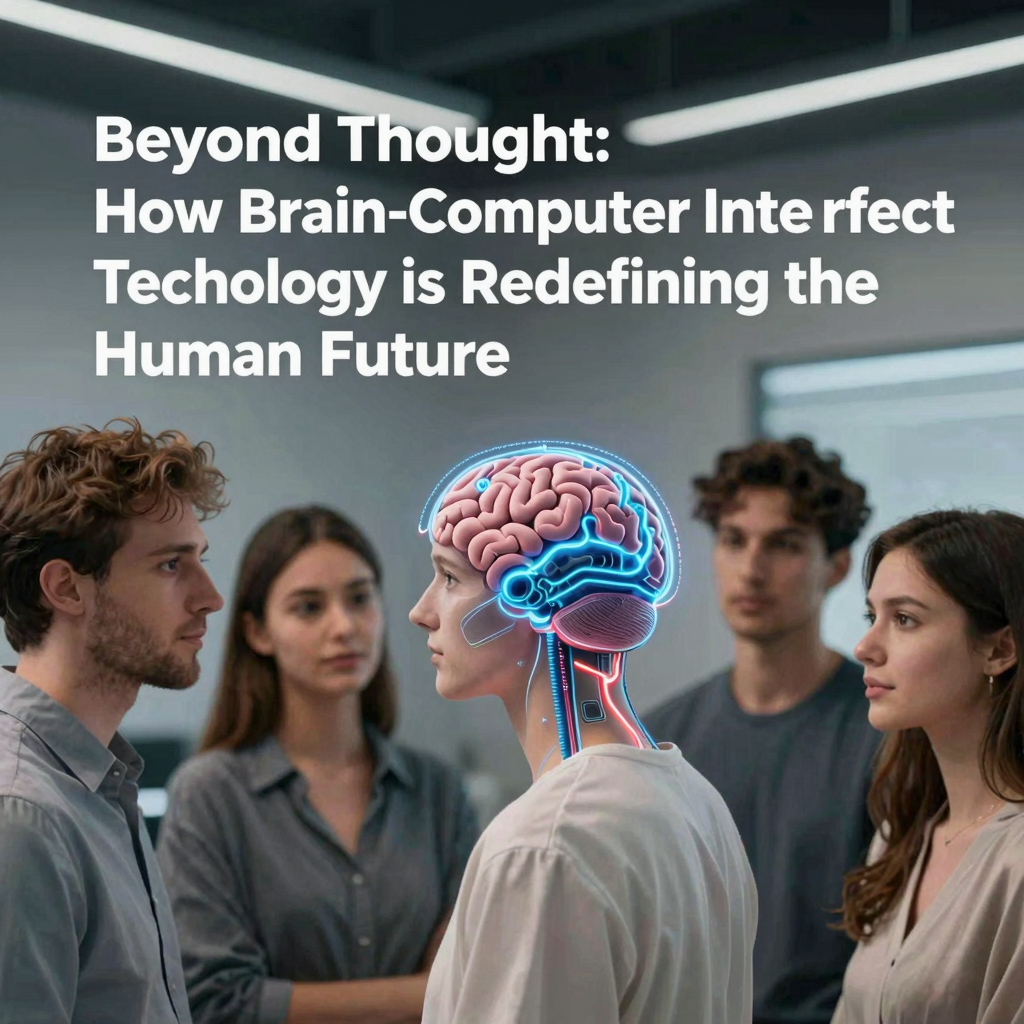
For decades, the concept of controlling machines with our minds has been the exclusive domain of science fiction. From telekinetic heroes to dystopian neural networks, the idea has captivated our imagination. Today, that fiction is rapidly becoming fact through the extraordinary evolution of Brain-Computer Interface (BCI) technology. A BCI is a direct communication pathway between the brain’s electrical activity and an external device, most commonly a computer. This isn’t about reading vague emotions or thoughts; it’s about translating specific neural signals into actionable digital commands, creating a seamless bridge between our biological essence and the digital world. The implications are so profound that they challenge our very definitions of ability, communication, and human potential.
From Lab to Life: The Mechanics and Methods of Modern BCIs
At its core, a BCI system functions as a sophisticated translator. It must first acquire brain signals, then process and decode them, and finally output a command to a device. The journey begins with the measurement of brain activity, primarily using one of two approaches: invasive or non-invasive.
Invasive vs. Non-Invasive: Two Paths to the Mind
Invasive BCIs involve surgically implanting electrodes directly onto the surface of the brain (electrocorticography, or ECoG) or even penetrating into the cortex. This method provides the highest-quality signal, capturing the rapid, nuanced electrical activity of individual neurons. It’s the technology behind some of the most headline-grabbing BCI breakthroughs, enabling paralyzed individuals to control robotic arms with dexterity or type on a screen by thought alone. Companies like Neuralink are pushing this frontier further, developing ultra-thin, high-density electrode arrays intended to be implanted by advanced surgical robots.
Non-Invasive BCIs, on the other hand, measure brain activity from outside the skull. The most common tool is the electroencephalogram (EEG), which uses a cap of electrodes placed on the scalp. While EEG signals are “blurred” by the skull and less detailed than invasive readings, they are safe, portable, and have already found significant commercial and clinical applications. Other non-invasive methods include functional Near-Infrared Spectroscopy (fNIRS), which measures blood oxygenation changes, and magnetoencephalography (MEG), which measures magnetic fields induced by neural activity.
The real magic happens in the software. Advanced machine learning algorithms are trained to recognize patterns in the noisy neural data. A user might imagine moving their left hand, and the algorithm learns the distinct “signature” of that intention. Over time, this creates a calibrated, personalized translation layer between thought and action.
Transforming Therapeutics: The Most Immediate Impact of BCIs
The most compelling and immediate application of BCI technology lies in medicine and rehabilitation, offering hope where traditional therapies reach their limits. Here, BCIs are not about augmentation, but about restoration.
- Restoring Mobility and Communication: For individuals with spinal cord injuries, ALS, or stroke, BCIs can bypass damaged neural pathways. Users can control computer cursors, speech synthesizers, or robotic limbs directly with their thoughts, reclaiming independence. Pioneering research has even demonstrated “digital touch” feedback from robotic hands to the brain, creating a bidirectional loop.
- Treating Neurological and Psychiatric Disorders: BCIs are opening new frontiers in treating conditions like epilepsy and Parkinson’s disease. Implantable “neurostimulators” can detect the onset of a seizure or tremor and deliver a pulse to suppress it. Similarly, closed-loop systems are being explored for depression and PTSD, aiming to modulate aberrant neural circuits in real-time.
- Neurorehabilitation: After a stroke, BCIs can be used to reinforce neural plasticity. A system might detect the weak intention to move a paralyzed limb and immediately trigger a functional electrical stimulation (FES) device to actually move the limb. This “rewards” the correct brain signal, helping to rebuild the damaged connection through consistent feedback.
The Augmentation Frontier: From Entertainment to Expanded Cognition
Beyond restoring lost function lies the more controversial and thrilling realm of augmentation. This domain asks: what can BCIs do for a healthy, able-bodied human? The answers are already emerging.
Consumer and Enterprise Applications
The gaming and entertainment industries are early adopters of non-invasive BCIs. Headsets that measure focus and relaxation states can change a game’s difficulty or narrative in real-time, creating deeply immersive experiences. In the workplace, BCIs could monitor cognitive load in high-stakes professions like air traffic control or surgery, alerting an operator when they are becoming fatigued. Training and education could also be revolutionized, with systems adapting material based on a student’s measured engagement and comprehension.
The Long-Term Vision: Symbiosis and Cognitive Expansion
The most futuristic visions involve a true symbiosis between human and machine intelligence. Think of a “neural lace” – a seamless BCI that could act as a constant cognitive assistant. It could provide instant access to vast databases of information, translate languages in real-time as you hear them, or allow for complex conceptual communication that transcends language. This blurs the line between memory and cloud storage, between calculation and computer processing. It prompts profound questions: Would this make us less human, or more? Could it lead to new forms of inequality based on access to cognitive enhancement?
Navigating the Neural Frontier: Ethical and Societal Challenges
As with any transformative technology, the promise of BCIs is inextricably linked with profound ethical and societal challenges. We must navigate these with care and foresight.
- Privacy and Security of Neural Data: Our brain data is the ultimate private information. Who owns it? How is it stored and protected? Could it be hacked, manipulated, or used for neuromarketing? Robust legal frameworks for “neuro-rights” are urgently needed.
- Identity and Agency: If a BCI influences our thoughts or moods (e.g., for treating depression), to what extent are our subsequent actions and decisions our own? The concepts of free will and personal identity could be challenged.
- Accessibility and Inequality: There is a significant risk that cognitive augmentation technologies could become a luxury for the wealthy, creating a “neuro-divide” between the enhanced and the unenhanced, exacerbating existing social inequalities.
- Informed Consent and Long-Term Effects: For invasive procedures, ensuring truly informed consent from potentially vulnerable patient populations is critical. Furthermore, the long-term effects of having permanent implants in the brain are still being studied.
Brain-Computer Interface technology stands at a remarkable inflection point. What began as a niche medical research tool is blossoming into a technology with the power to restore lost faculties, reshape human-computer interaction, and ultimately expand the boundaries of human cognition. The path forward is not merely a technical one; it is a deeply human journey that requires collaboration between neuroscientists, engineers, ethicists, policymakers, and the public. We are not just building tools to interface with machines; we are building a new lens through which to understand ourselves. The challenge and opportunity lie in steering this incredible technology toward a future that is not only technologically advanced but also equitable, ethical, and profoundly human.